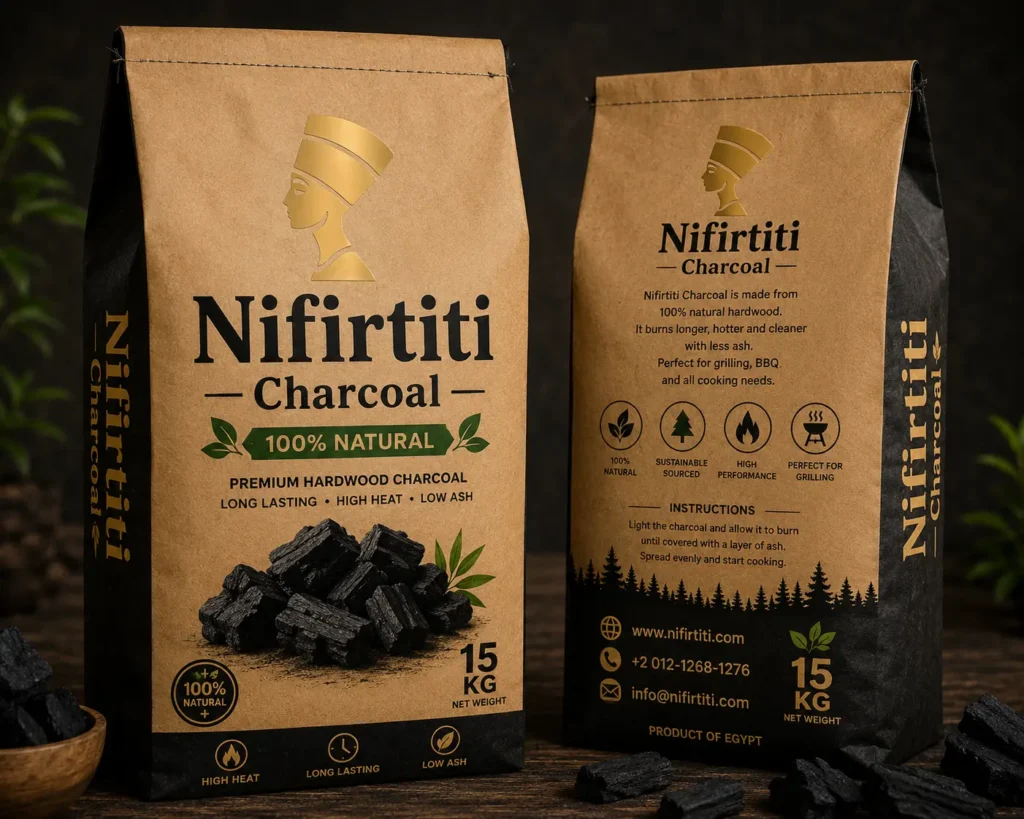
Nifirtiti is one of Egypt’s charcoal exporters, supplying hardwood charcoal made from Casuarina wood, alongside shisha-grade cube charcoal, to wholesale buyers internationally. Indonesia dominates the global charcoal trade at roughly 23% of the $1.53 billion export market, followed by Vietnam, Laos, the Philippines, and China — Egypt is not among the top exporters by volume, but Egyptian Casuarina charcoal is specifically valued for burning without sparking, making it popular with restaurants and professional grill operators. Nifirtiti supplies wholesale charcoal exporter services including export documentation, customs clearance support, and packaging suited to both retail and bulk buyers.
Nifirtiti Charcoal Exporters: Egypt's Trusted Charcoal Supply
Quick summary: Nifirtiti is one of Egypt’s established charcoal exporters, supplying Casuarina hardwood charcoal and shisha-grade charcoal to wholesale buyers across Europe, the Gulf, and Africa. While Indonesia leads the world charcoal trade by a wide margin, Egypt’s Casuarina wood charcoal has earned a specific reputation for quality among restaurant and BBQ buyers.
Introduction
Charcoal exporters are judged on a narrower set of criteria than most agricultural products — burn quality, spark behavior, ash content, and moisture level matter more to buyers than appearance ever will. Nifirtiti has positioned itself among Egypt’s charcoal exporters by focusing on exactly these fundamentals, supplying Casuarina hardwood charcoal and shisha-grade charcoal to buyers who need consistent burn performance shipment after shipment.
This guide explains what separates dependable charcoal exporters from inconsistent ones, where Egypt genuinely fits in the global charcoal trade, and what buyers should verify before committing to a wholesale charcoal exporter for a bulk order.
Where Egypt Fits in the Global Charcoal Trade
Global trade data is worth stating honestly rather than inflating. According to 2024 trade data compiled from ITC Trade Map and World Bank WITS, the global wood charcoal export market is worth $1.53 billion, with Indonesia holding a commanding lead at roughly 23% of global export value ($351 million), driven by vast tropical forests and coconut shell charcoal production. Vietnam, Laos, the Philippines, and China round out the next tier of major exporters.
Egypt does not appear among the top 15 charcoal-exporting countries by value. Any claim suggesting Egypt dominates the global charcoal trade wouldn’t hold up against this data, and a credible exporter shouldn’t pretend otherwise.
What Egypt does offer is a specific product reputation rather than volume dominance: Casuarina wood charcoal. This hardwood, widely grown in Egypt, produces charcoal that burns hot, lasts long, and — critically for restaurant buyers — doesn’t spark during use. That single characteristic has made Egyptian charcoal a preferred choice among professional kitchens and grill operators who can’t risk sparking near food or staff.
The Charcoal Products Nifirtiti Supplies
A serious wholesale charcoal exporter typically offers more than one product type, since restaurant buyers, retail chains, and shisha lounges have different requirements:
Casuarina Hardwood Charcoal
Made from Casuarina wood, this is Egypt’s flagship charcoal export. It’s dense, burns for extended periods, and produces minimal sparking — the reason it’s specifically requested by restaurants rather than generic “any hardwood” charcoal.
Shisha Cube Charcoal
A manufactured charcoal product, ground from natural or plant-based material and pressed into uniform cubes. Demand for shisha charcoal has grown steadily across European and Gulf markets alongside the broader hookah lounge industry.
Lemon Wood Charcoal
A specialty charcoal variety regarded in the Egyptian charcoal industry as one of the finer natural charcoal types, valued for consistent burn quality.
Charcoal Briquettes
Compressed charcoal made from charcoal dust and biomass, offering more uniform sizing than natural lump charcoal — useful for buyers who prioritize consistent burn time over the smokier flavor some grill users prefer from lump charcoal.
How Charcoal Moves From Production to Export
Sourcing and Carbonization
Wood is sourced and carbonized in kilns, a process that converts raw wood into charcoal through controlled, low-oxygen burning. The carbonization method significantly affects moisture content and burn quality in the final product.
Grading by Size and Moisture Content
Export-grade charcoal is sorted by lump size and tested for moisture content. Charcoal with excess moisture burns inconsistently and produces more smoke — a common complaint when buyers source from unverified suppliers.
Packaging
Charcoal exporters typically pack product in:
- Retail bags — branded packaging for supermarket and consumer sale
- Bulk sacks — standard for wholesale and food service buyers
- Custom branding — private-label packaging for retail chains
Documentation and Customs Clearance
Charcoal shipments require export documentation similar to other agricultural products, including customs clearance paperwork and, depending on the destination, phytosanitary or fumigation certificates confirming the product meets import biosecurity requirements.
Benefits and Trade-Offs of Sourcing from Egyptian Charcoal Exporters
Benefits:
- Casuarina charcoal’s low-spark burn quality is specifically valued by professional restaurant buyers
- Competitive pricing relative to Southeast Asian origins once freight to Europe and the Gulf is factored in
- Multiple product types (hardwood, shisha cube, briquettes) available from a single wholesale charcoal exporter
- Shorter shipping distance to European and Gulf markets than Indonesia or Vietnam
Trade-offs to plan for:
- Egypt’s total export volume is far smaller than Indonesia’s, so very large-scale buyers may need to diversify suppliers
- Quality varies significantly between Egyptian producers — vetting a specific exporter matters more than sourcing “Egyptian charcoal” generically
- Buyers should confirm moisture content and burn testing results before committing to large orders, since these details are rarely visible from a photo or spec sheet alone
Practical Steps Before Ordering from a Charcoal Exporter
- Request a sample bag before a bulk order. Burn testing at your own facility reveals spark behavior, ash residue, and burn time far more reliably than a supplier’s claims.
- Ask for moisture content data. Reputable charcoal exporters test and disclose this rather than leaving buyers to find out after the shipment arrives.
- Specify the charcoal type clearly. Casuarina hardwood, shisha cube, and briquettes behave differently — confirm which one matches your actual use case.
- Confirm export documentation upfront, including any fumigation or phytosanitary certificates your destination country requires.
- Clarify Incoterms and packaging format before finalizing pricing, since retail bags, bulk sacks, and private-label packaging carry different costs.
Expert Insight: What Actually Determines a Reliable Charcoal Exporter
After watching charcoal shipments succeed or disappoint buyers repeatedly, one pattern holds: the exporters who retain long-term restaurant and retail clients are the ones who test and disclose moisture content and burn quality proactively, rather than waiting for a buyer to complain after a bad batch. Charcoal is a product where quality problems don’t show up until it’s actually burned — by then, a bulk shipment is already sitting in a buyer’s warehouse.
This is why Nifirtiti’s approach as a charcoal exporter — grading by size and moisture before packing, and being upfront about Egypt’s actual position in the global market rather than overstating it — matters more to serious buyers than marketing claims about scale.

Premium BBQ Hardwood Charcoal — Typical
Best-Quality Specs
Calorific Value
Higher value = more efficient, longer-lasting heat
7,000–8,000 kcal/kg
Volatile Matter
Lower volatile matter = less smoke, less flare-up
12–18%
Ash Content
Lower ash = cleaner grill, less residue
≤ 3% (premium: 1.5–3%)
New Office, CA
Fixed Carbon
Higher fixed carbon = longer, hotter, cleaner burn
75–85%
Moisture
Lower moisture = easier lighting, higher heat output
≤ 5% (ideally 3–5%)
Looking for other export categories? Nifirtiti also supplies fresh mangoes, navel oranges, and export-grade onions — all under the same certified sourcing standards. Read more in Charcoal and the Environment.
Frequently Asked Questions
1. What makes Egyptian charcoal exporters different from Indonesian or Vietnamese suppliers? Egyptian charcoal, particularly Casuarina hardwood charcoal, is specifically valued for burning without sparking, making it a preferred choice for professional restaurant and grill use rather than competing on volume with larger Southeast Asian producers.
2. Is Egypt among the world’s largest charcoal exporters? No. Indonesia leads the global charcoal trade at roughly 23% of export value, followed by Vietnam, Laos, the Philippines, and China. Egypt is not among the top 15 exporters by volume, but supplies a specific, well-regarded hardwood charcoal product.
3. What charcoal types does Nifirtiti supply as a wholesale charcoal exporter? Nifirtiti supplies Casuarina hardwood charcoal, shisha cube charcoal, and charcoal briquettes, covering both food service and hospitality market needs.
4. How can I verify charcoal quality before placing a bulk order? Request a sample bag for burn testing, and ask the exporter to disclose moisture content data rather than relying on visual inspection alone.
5. What documentation is required to import charcoal from Egypt? Requirements vary by destination country but typically include standard export customs documentation and, in some cases, fumigation or phytosanitary certificates confirming biosecurity compliance.
Conclusion
Charcoal exporters are ultimately judged by burn performance, not export volume — and that’s exactly where Egypt’s reputation holds up, even though the country isn’t among the world’s largest charcoal exporters by trade value. Nifirtiti’s position as a wholesale charcoal exporter rests on supplying Casuarina hardwood charcoal known for its low-spark burn quality, alongside shisha cube charcoal and briquettes for buyers with different needs. For wholesalers and restaurant suppliers comparing charcoal exporters, moisture testing, documented burn quality, and honest positioning matter more than inflated claims about global market share.
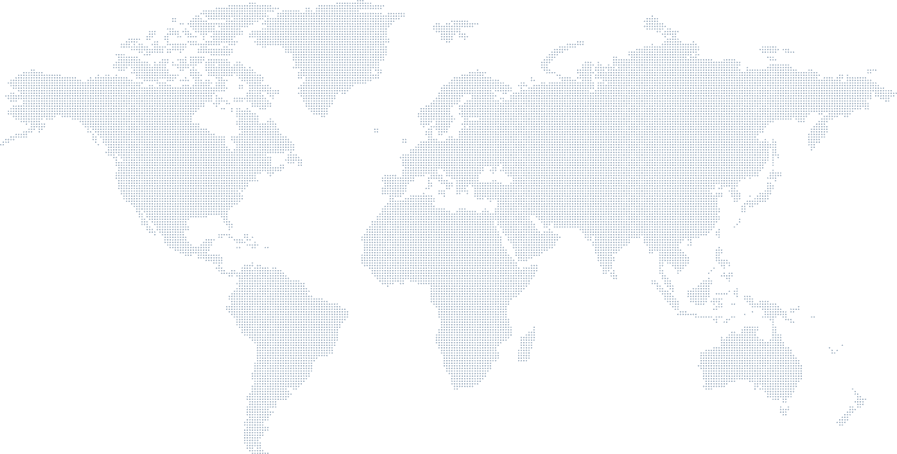
Our customers through the world
UAE (Gulf Region)
A key Gulf destination for Casuarina hardwood and shisha charcoal, driven by strong restaurant and hospitality demand plus year-round hookah lounge consumption.
Saudi Arabia
Saudi Arabia
Steady demand from food-service buyers and shisha lounges, with hardwood charcoal favored by grill operators for its low-spark burn quality.
Jordan & Iraq
Regional overland and short-sea markets where Egyptian charcoal competes on freight cost and delivery speed against alternative regional sources.
Libya
A nearby North African buyer benefiting from short transit times, supporting smaller, more frequent shipments of hardwood charcoal.
China
Not a significant current outlet — China is itself among the world's top charcoal-exporting countries, so demand here is limited rather than a growth market for Egyptian supply.
Canada
A smaller, developing market for Egyptian charcoal, typically requiring reefer or standard sea freight along with export documentation to meet North American import requirements.
European Union
European Union (Netherlands, France & beyond)
A quality-focused market where Casuarina charcoal's no-spark burn is valued by restaurants; shipments require documentation confirming compliance with EU biosecurity and phytosanitary rules.
United Kingdom
A hospitality-driven market where professional kitchens and grill operators prioritize verified burn quality and low ash content over price alone
Netherlands
Functions as a European distribution point, useful for reaching wider EU restaurant and retail buyers from a single import hub.
Russia
A market with growing interest in hardwood charcoal for food service, though buyers here typically require clear documentation given longer shipping routes.
EXPORTED CHARCOAL
Time has changed
Business Hours