Nifirtiti Company: Trusted Garlic Powder Exporters from Egypt

garlic powder exporters
Nifirtiti Expo

Nifirtiti Expo

Typically replies within a day

Hey, Do you want to talk with us?


Quick summary: Nifirtiti is an Egypt-based company among the country’s established garlic powder exporters, supplying dehydrated garlic powder to B2B buyers worldwide through certified farms and export-ready packaging. Buyers searching for bulk garlic powder suppliers will find Nifirtiti’s certification record, sourcing model, and logistics network relevant to their procurement decision.

When international buyers search for reliable garlic powder exporters, sourcing consistency and documentation matter more than price alone. Nifirtiti, an Egyptian company already established in fresh produce export, has built its reputation on certified sourcing from over 120 farms and full compliance with GlobalG.A.P., ISO 22000, and HACCP standards — the same framework it applies across its garlic supply chain, from fresh bulbs to dehydrated powder.

This guide breaks down what buyers should know before sourcing garlic powder internationally: how the export process works, what separates a serious supplier from a reseller, and where Nifirtiti fits among Egypt’s garlic powder manufacturer landscape.

Why Egypt Has Become a Hub for Garlic Powder Exporters

Egypt’s climate and soil conditions are well suited to garlic cultivation, and the country has grown into a significant global garlic supplier — feeding demand across Europe, the Gulf, Russia, Africa, and East Asia. That existing fresh-garlic export infrastructure is exactly what makes Egyptian garlic powder manufacturer operations competitive: the raw material is already grown, sorted, and export-certified locally, which shortens the supply chain between farm and dehydration facility.

For buyers, this matters practically. An Egypt-based garlic powder manufacturer can typically offer more stable pricing and faster turnaround than suppliers who import raw garlic from elsewhere before processing it.

What Makes Nifirtiti a Garlic Powder Supplier Worth Evaluating

Nifirtiti’s core strengths, drawn from its established fresh-produce export operations, apply directly to its position among garlic powder exporters:

  • Sourcing from more than 120 certified partner farms across Egypt
  • GlobalG.A.P., ISO 22000, and HACCP certification across the supply chain
  • A direct farm-to-export model with no middlemen, reducing cost and lead time
  • Existing shipping relationships across Europe (Germany, Netherlands, UK), the GCC (Saudi Arabia, UAE, Kuwait), Russia, Africa, and East Asia
  • Both white and red garlic varieties available in fresh and dried form

That combination — certified sourcing plus an active international shipping network — is what separates a genuine Nifirtiti garlic powder supplier relationship from a one-off trading contact found on a marketplace listing.

Nifirtiti is an Egypt-based company positioned among established garlic powder exporters, applying the same certified sourcing model (GlobalG.A.P., ISO 22000, HACCP) used across its fresh produce export operations to dehydrated garlic powder supply. The company sources from over 120 certified farms and ships to Europe, the GCC, Russia, Africa, and East Asia. Buyers evaluating bulk garlic powder suppliers should verify certification documentation, mesh size and moisture specifications, packaging format, and minimum order quantity before purchasing. This guide outlines the procurement process, pricing drivers, and a practical checklist for sourcing dehydrated garlic powder internationally with confidence.

  1.  

Dehydrated Garlic Powder Exporters vs. Fresh Garlic Suppliers

It’s worth understanding this distinction clearly, since some listings blur the two. Dehydrated garlic powder exporters handle a fully processed, shelf-stable product with a long storage life and no cold-chain requirement during transit. Fresh garlic suppliers, by contrast, ship an unprocessed product that requires temperature control and has a much shorter shelf life.

For buyers in food manufacturing, seasoning blends, or foodservice, garlic powder’s shelf stability and consistent particle size typically make it the more practical sourcing option compared to fresh bulbs — even though fresh garlic remains in demand for retail produce markets.

Pros and Cons of Sourcing Garlic Powder from Egyptian Exporters

Advantages:

  • Egypt’s established garlic-growing infrastructure supports consistent raw material supply
  • Existing shipping relationships to Europe, the Gulf, and East Asia reduce logistics uncertainty
  • Competitive FOB pricing compared to some Asian and European alternatives
  • Certification standards (GlobalG.A.P., ISO 22000, HACCP) increasingly align with EU and US import requirements

Considerations to weigh:

  • Seasonal harvest timing can affect raw garlic availability for processing
  • Buyers should independently verify certification currency rather than relying on website claims alone
  • Smaller orders may not access the best wholesale pricing tiers

Real-World Example: How a B2B Garlic Powder Order Typically Unfolds

A typical transaction with an established garlic powder B2B supplier follows a repeatable pattern: the buyer sends a trade inquiry specifying quantity, mesh size, and destination port; the supplier returns a quotation within 24–48 hours; a sample shipment confirms quality before the full order is placed; and the final shipment includes lab test results and phytosanitary documentation alongside the goods. This structure — inquiry, quotation, sample, full order, documentation — is the same pattern Nifirtiti follows across its produce export lines, and it’s a reasonable benchmark to hold any garlic powder exporters near me search against, regardless of which company you ultimately choose.

Garlic Powder Exporters Near Me: Why “Local” Isn’t Always the Right Filter

Buyers often start their search with “garlic powder exporters near me,” but proximity matters far less in this category than in most sourcing decisions. What actually determines total landed cost and reliability is:

  • Port access and shipping frequency to your destination
  • Certification alignment with your country’s import regulations
  • Minimum order quantity fit for your business size
  • Communication responsiveness during quotation and documentation stages

A supplier several thousand miles away with strong port logistics and clean documentation will consistently outperform a “local” option with inconsistent certification records.

Conclusion

Choosing among garlic powder exporters comes down to verifiable fundamentals: certified sourcing, transparent specifications, realistic minimum order quantities, and export-ready packaging that matches your distribution model. Nifirtiti’s existing track record — certified farms, GlobalG.A.P./ISO 22000/HACCP compliance, and active shipping lanes to Europe, the GCC, Russia, Africa, and East Asia — reflects the operational depth that serious B2B buyers should look for in any bulk garlic powder supplier relationship. Whether you’re comparing a handful of dehydrated garlic powder exporters or evaluating a single Egypt-based garlic powder manufacturer, apply the same checklist: certifications first, specifications second, and price only after both are confirmed in writing.

Garlic powder manufacturer Egypt quality inspection process
Garlic powder manufacturer


Bulk Garlic Powder Suppliers: What Buyers Should Actually Check

Not every listing claiming to be a garlic powder exporter operates its own supply chain. Before committing to a purchase order, run through this checklist:

  1. Certification documentation. Ask for current GlobalG.A.P., ISO 22000, and HACCP certificates, not just logos on a website.
  2. Traceability to source farms. A supplier that can name its growing regions is more credible than one who can’t explain where the raw garlic comes from.
  3. Moisture content and mesh size specs. Garlic powder quality is measured in specific, verifiable numbers — a vague answer here is a warning sign.
  4. Salmonella and microbiological testing results. This is now a standard requirement in most import markets, particularly the EU and US.
  5. Packaging options for export. Confirm whether the supplier offers multiwall paper bags, woven sacks with food-grade liners, or drums — your logistics setup should match their standard packaging for export.

Garlic Powder Packaging for Export: Formats to Expect

Serious exporters typically offer more than one packaging tier, since bulk food-industry buyers and retail-focused buyers have different needs:

  • Bulk/industrial: multiwall paper bags or woven sacks with food-grade liners, generally 25kg per bag
  • Higher-protection bulk: fiber or plastic drums for buyers needing extra moisture protection during long ocean transit
  • Private label / retail-ready: sealed jars or flexible sachets with moisture and oxygen barriers, used when the buyer plans to sell the garlic powder directly to consumers under its own brand

Confirming garlic powder packaging for export options early avoids costly repackaging delays once a shipment reaches port.

Garlic Powder Wholesale Price: What Drives the Number

Buyers frequently ask why garlic powder wholesale price varies so widely between suppliers quoting on the same product. In practice, price differences usually come down to a handful of factors:

  • Mesh size and processing grade — finer, more consistent powder costs more to produce
  • Certification level — organic or additionally certified batches carry a premium
  • Packaging format — retail-ready sachets cost more per kilo than bulk industrial bags
  • Order volume — garlic powder minimum order quantity requirements affect per-unit pricing, since smaller orders rarely get bulk rates
  • Shipping terms — FOB pricing differs from CIF pricing, and buyers should always clarify which one a quoted price refers to

Expert tip: Always request pricing in writing tied to a specific mesh size, moisture percentage, and Incoterm (FOB/CIF). A quote without these details isn’t comparable across suppliers.

Buy Garlic Powder in Bulk: A Practical Step-by-Step Process

If you’re planning to buy garlic powder in bulk for the first time, here’s a realistic process to follow:

  1. Define your specifications — mesh size, moisture content, certification requirements, and destination country regulations.
  2. Shortlist garlic powder exporters with verifiable certification and export history to your target region.
  3. Request samples before committing to a full container order.
  4. Confirm garlic powder minimum order quantity and whether it aligns with your storage and cash-flow capacity.
  5. Clarify packaging for export and confirm it matches your distribution plan (bulk resale vs. retail-ready).
  6. Review payment terms and Incoterms — FOB, CIF, and payment security methods vary by supplier.
  7. Track pre-shipment inspection and documentationphytosanitary certificates and lab test results should arrive before the shipment leaves port.
Nifirtiti garlic powder exporters dehydration and processing facility
Nifirtiti garlic powder exporters

Quick Price Quote

Need an urgent quote?   

Bulk garlic powder suppliers packaging in export-ready bags
Bulk garlic powder suppliers

Egypt is one of the world’s leading dehydrated garlic exporters (after China), and its garlic-powder trade is generally sold under a few standard forms and grades:

By particle size/form
Egyptian exporters typically offer dehydrated garlic across a range of textures, not just fine powder available as flakes, granules, minced, or powdered forms. Within the “powder” category specifically, the common grades sold internationally (and matched by Egyptian suppliers) are: Go4WorldBusiness.

  • Fine garlic powder – ground and sieved to roughly 80–100 mesh, sometimes up to 100–120 mesh for very fine, smooth powder. GarlicspicesHxspice
  • Granulated garlic – coarser than powder, commonly granulated to a 60/80 mesh specification, giving free-flowing granules good for uniform dispersion in liquids. Occidentalfoods
  • Minced garlic – dehydrated to medium-size granules around 8/20 mesh, used when visible garlic pieces plus flavor are wanted. Occidentalfoods
  • Chopped/flake garlic – coarser cuts, generally chopped garlic 5–10 mesh up to ground garlic 16–40 mesh, or sold as flakes in 1–2 mm or 2–3 mm cut sizes. GarlicspicesGuoJu Green Foods

Typical Egyptian export specification
Standard commercial-grade Egyptian dehydrated garlic (across these forms) is generally specified with moisture at a maximum of about 6.5% and purity around 99.5%, free of foreign materials or artificial additives. However, some suppliers quote tighter specs (99% purity, 1% admixture, less than 5% moisture). Go4WorldBusinessGo4WorldBusiness

Source varieties
Most of Egypt’s dehydrated garlic (powder, granules, flakes) is processed from the country’s large white garlic — the export mainstay, firm and well-storing — as well as improved high-yield varieties, feeding a significant dehydrated segment that supplies flakes, granules, minced garlic, and powder to food manufacturers worldwide. The more pungent purple/red Balady-type garlic is also used, though it’s more often exported fresh for its intense pungency than processed into powder. PEI TradePEI Trade

Packaging
For export, powder is usually packed in food-grade PE or aluminum-foil inner bags with kraft paper carton outer packaging, in 10–20 kg units, or in bulk paper/polypropylene bags for larger shipments, similar to other Egyptian dehydrated products. GuoJu Green Foods

Trade scale
For context, Egypt is a notable global supplier of this category — India and Egypt together export roughly 200,000+ tons of dehydrated garlic annually, well behind China but still a meaningful share of world trade. Garlicspices

If you’re sourcing, the practical decision usually comes down to mesh size (fine powder vs. granules vs. flakes), moisture spec, and packaging format — happy to help you compare specific supplier quotes if you have any.

For fresh garlic bulbs, see Nifirtiti Garlic Exporter; for the US market, visit Egyptian Garlic Exporter USA. We also produce Red Onion Powder on the same line.

Frequently Asked Questions

1. What should I look for in reliable garlic powder exporters? Verify current GlobalG.A.P., ISO 22000, and HACCP certifications, request traceability to source farms, and confirm moisture content and mesh size specifications before ordering.

2. What is a typical garlic powder minimum order quantity? Minimum order quantities vary by supplier and packaging format, but bulk industrial orders are commonly quoted per metric ton, while smaller trial orders may be available for sampling purposes.

3. How is garlic powder wholesale price determined? Pricing depends on mesh size, certification level, packaging format, order volume, and shipping terms (FOB vs. CIF) — always request quotes tied to specific technical details.

4. What packaging options exist for garlic powder export? Common formats include 25kg multiwall paper bags or woven sacks for bulk buyers, fiber or plastic drums for extra moisture protection, and sealed jars or sachets for retail-ready private label orders.

5. Is dehydrated garlic powder better than fresh garlic for export? For food manufacturing and foodservice buyers, dehydrated garlic powder offers longer shelf life and no cold-chain requirement, making it more practical for long-distance shipping compared to fresh garlic bulbs.

Exported Garlic Powder

Time has changed

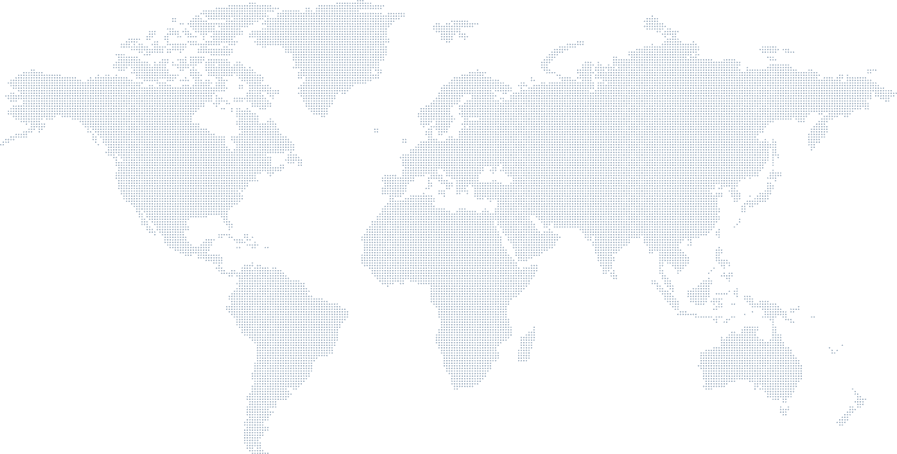
Our customers through the world

map

UAE (Gulf Region)

A core GCC market for bulk garlic powder, with strong demand from food manufacturers and foodservice buyers using it in seasoning blends and packaged spice mixes.

Saudi Arabia


One of the strongest Gulf buyers of dehydrated garlic powder, driven by large-scale food processing and retail spice packaging demand.

Kuwait

A steady GCC buyer of bulk garlic powder, typically sourced alongside broader Gulf shipments to food manufacturers and distributors.

Africa (Regional)


A developing outlet for bulk garlic powder, benefiting from shorter shipping routes and growing food-manufacturing demand across the continent.

East Asia (Regional)


An emerging market for Egyptian dehydrated garlic powder, competing alongside China — the world's largest garlic powder exporter — on quality and documentation rather than price alone.

Netherlands


A major European distribution hub for re-exporting Egyptian garlic powder across the continent's food processing and retail spice networks.

United Kingdom

A retail- and food-manufacturing-driven market where fine mesh consistency and verified moisture specs matter as much as certification paperwork.

Germany


A key EU entry point for certified garlic powder, where GlobalG.A.P. and HACCP documentation are essential to clear strict food-safety import checks.

Russia

A steady, established buyer of bulk garlic powder, offering Egyptian exporters a reliable outlet alongside GCC and EU demand.

Request a Quotation

Contact Form Demo

One Response

Leave a Reply

Your email address will not be published. Required fields are marked *

ExportBureau profile